What is Trigeminal Neuralgia?
Trigeminal Neuralgia (TN) is a sudden and intense pain in the face that drives thousands of people to seek treatment each year.
TN related pain is described as a stabbing, shooting, sharp, or piercing sensation. It can occur anywhere between the jaw and forehead, including in the mouth.
Vascular compression of the trigeminal nerve root is a typical cause for TN


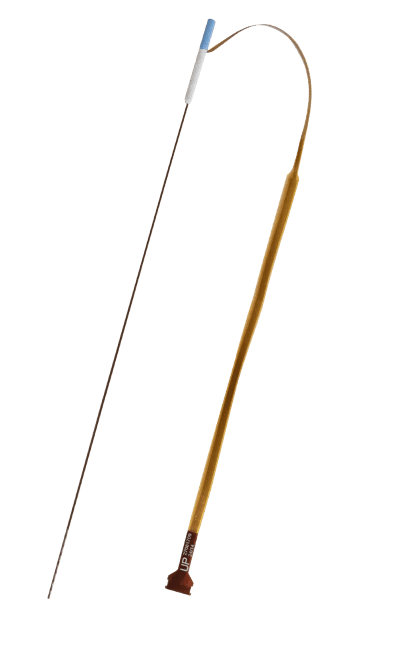
Effective trigeminal neuralgia treatment shouldn’t require endless cycles of repositioning or uncertainty. With the OneRF® system, surgeons could simplify the ablation process to a single, decisive step.
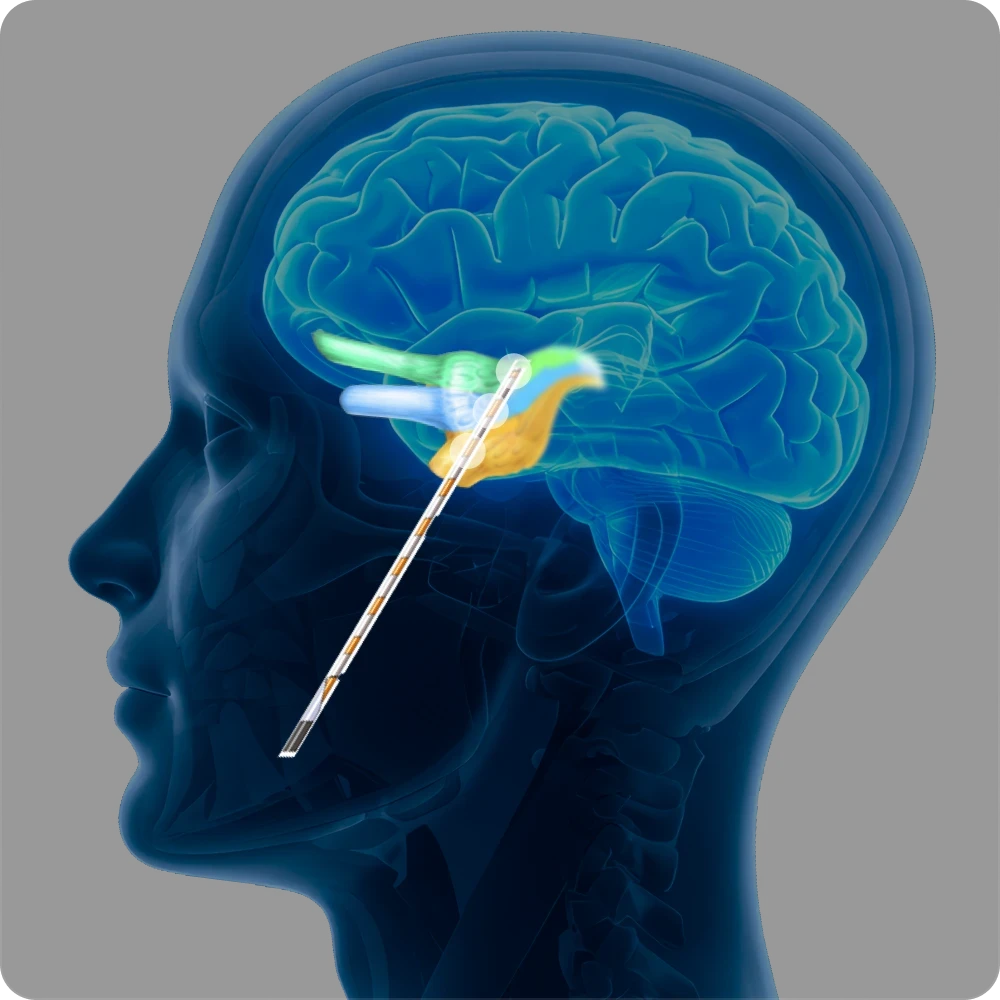
The innovative multi-contact probe is designed to enable stimulation/mapping and ablation in fewer cycles; and may reduce patient discomfort and procedure complexity. With OneRF®, freedom from facial pain means freedom for patients—and clarity and confidence mean liberation for surgeons.
Indication for Use:
The NeuroOne OneRF® Trigeminal Nerve Ablation System is indicated for use in procedures to create radiofrequency lesions for the treatment of pain, or for lesioning nerve tissue for functional neurosurgical procedures. FDA 510(k) Clearance: K251243
Caution: Federal law restricts this device to sale by or on the order of a physician.
See instructions for use for additional information (eg. Description, indications for use, contraindications, warnings, adverse events etc.)
*Radiofrequency ablation has been shown to provide immediate pain relief in up to 98 % of patients, with 80 % remaining pain free 12 months post procedure [Dessy R Emril & Kok-Yuen Ho (2010) Treatment of trigeminal neuralgia: role of radiofrequency ablation, Journal of Pain Research, , 249-254, DOI: 10.2147/JPR.S1445].
Reference(1)
A Closer Look at The OneRF® Trigeminal Nerve Ablation System
Press play to explore OneRF® Trigeminal Nerve Ablation System
Traditional trigeminal neuralgia procedures often involve multiple repositionings and anesthesia cycles.
One Step.
Improved Procedural Efficiency.
The OneRF® multi-contact probe is designed to streamline ablation into a single, decisive step—simplifying the surgical workflow and reducing procedural complexity. Less repositioning could result in fewer potential complications, lower risks, and greater surgical efficiency.
Reference(1)
One Step.
Enhanced Patient Comfort.
Every additional probe repositioning increases patient discomfort and anxiety. OneRF® eliminates unnecessary cannula adjustment, which may improve patient comfort during the procedure. Fewer anesthesia cycles mean potentially quicker recovery and less trauma, thereby providing faster relief and freeing patients from the relentless cycle of facial pain.
Reference(1)

3D Animation by

One Step.
Precise Ablation.
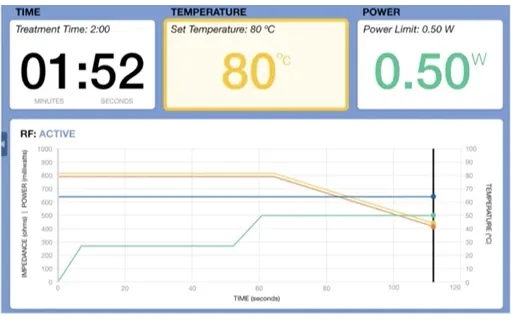
Precision matters, especially when treating sensitive nerve tissue. With multi-contact mapping and temperature-monitored ablation, OneRF® delivers precision. Surgeons gain clear and real-time control, confidently targeting pain. This procedural clarity liberates surgeons from uncertainty, empowering them to consistently deliver exceptional care.
Reference(1)
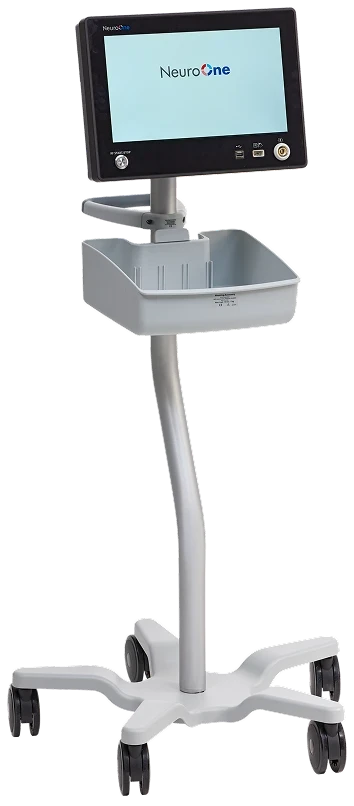
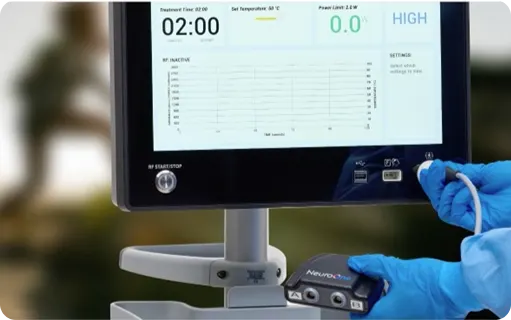
Designed for intuitive use and reproducible results.
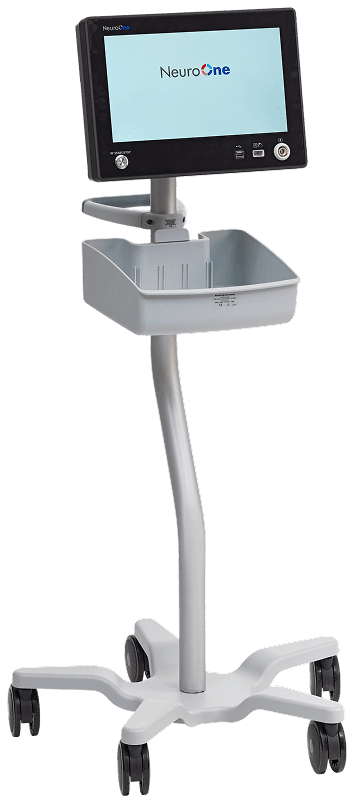
OneRF® Generator designed to work with NeuroOne multi-contact TN-RF Probes


Reference(1)
One Step.
Lasting Relief.
REFERENCES:
1. NeuroOne company data on file
2. Kanpolat Y, Savas A, Bekar A, Berk C. Percutaneous controlled radiofrequency trigeminal rhizotomy for the treatment of idiopathic trigeminal neuralgia: 25-year experience with 1,600 patients. Neurosurgery. 2001 Mar;48(3):524-32; discussion 532-4. doi: 10.1097/00006123-200103000-00013. PMID: 11270542.
3. Emril DR, Ho KY. Treatment of trigeminal neuralgia: role of radiofrequency ablation. J Pain Res. 2010 Dec 12;3:249-54. doi: 10.2147/JPR.S14455. PMID: 21311718; PMCID: PMC3033033.